
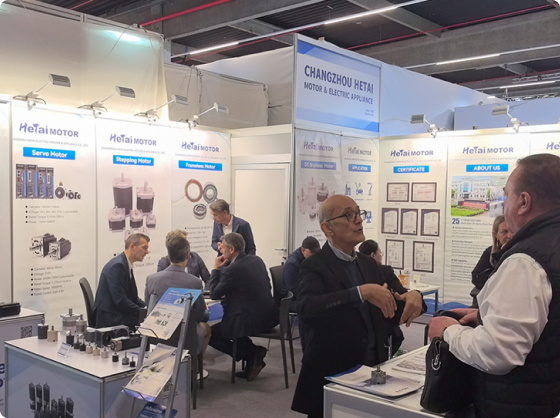
Dear Valued Customers and Partners,We have officially prepared your admission tickets for the 2025 SPS Fair in Nuremberg, Germany!Once again, Changzhou Hetai Motor sets sail. We sincerely look forward to meeting you at this top-tier exhibition for industrial automation.Visit our Hetai booth to unlock core intelligent drive solutions.• High-efficiency Brushless Motors – Energy-saving, low-noise and high-power outputOur core products continue to deliver consistent, reliable performance for your applications:We offer a diverse product lineup to cater to your unique application requirements.We are waiting for you at SPS 2025!This is an unmissable industry gathering and the perfect opportunity for us to deepen cooperation. We look forward to sharing our latest technological achievements and listening to your valuable insights at our booth.Mark your calendar now! We look forward to meeting and cooperating with you in Germany!Exhibition Name: 2025 SPS – Smart Production Solutions, Nuremberg, GermanyExhibition Date: November 25 – 27, 2025Hetai Booth No.: 1-537 (Our familiar booth awaits you!)Company Name: Changzhou Hetai Motor & Electric Appliance Co., Ltd.We deeply believe that your attention and trust are the most precious ticket to our partnership.We sincerely await your visit!
Driven by the advancement of intelligent automation, China’s electric lawn mower market size is projected to exceed 15 billion RMB in 2025, with a striking year-on-year growth rate of 36.4%.Behind this robust growth lies revolutionary progress in domestic motor technology.Full electrification transitionTraditional gasoline-powered lawn mowers are being rapidly replaced by electric alternatives, while market demand for intelligence has far exceeded expectations. Robotic lawn mowers equipped with precise navigation systems have become new industry favorites.Global rise of Chinese manufacturingGermany, the United States and the United Kingdom account for over 60% of China’s total exports. In 2024, Germany ranked first in Europe regarding imports of Chinese lawn mowers.As the "heart" of intelligent lawn mowers, motors with upgraded performance featuring high efficiency, low noise and high torque are directly fueling the industry’s shift toward greener, smarter and globalized development.First Stop: Cologne, Germany — Shaping the Future of GardeningFrom June 24 to 26, 2025, the global garden and outdoor industry will turn its attention to Cologne, Germany. As Europe’s largest and most influential outdoor and gardening trade fair, spoga+gafa 2025 takes "Design Your Garden" as its theme. The exhibition gathers more than 1,800 exhibitors from 66 countries and is expected to welcome over 28,000 professional visitors.Second Stop: Guangzhou, China — Expanding Boundaries of the Construction IndustryAfter the Cologne exhibition, Hetai Motors will head to the 27th China (Guangzhou) International Building Decoration Fair, held in Pazhou, Guangzhou from July 8 to 11. Known as the world’s No.1 exhibition for the whole-home construction and decoration industry, this edition covers an exhibition area of 400,000 square meters. It brings together nearly 2,000 exhibitors and is projected to attract more than 200,000 professional visitors from home and abroad.Across Two Continents, Connecting Gardening & ConstructionHetai Motors’ Dual Exhibition TourDemonstrating Chinese Motor TechnologyEmbracing the integration of global outdoor living and architectural spaces.In Germany, we present core power solutions for garden machinery;In Guangzhou, we explore unlimited potential of outdoor spaces.Cologne in June, Guangzhou in July.Hetai Motors invites you to jointly drive a greener future!
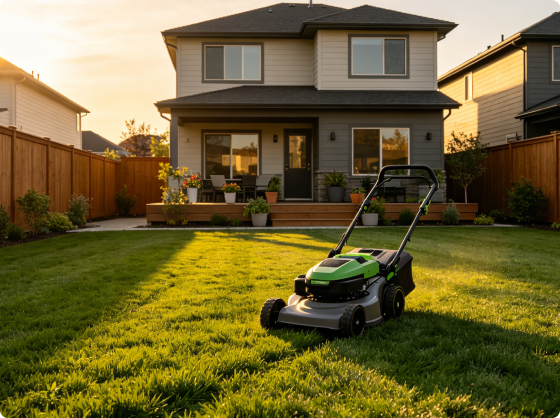
A lawn mower is mechanical equipment used to trim lawns and vegetation. It consists of a rotary disc, engine (motor), cutter disc, handrail and control unit. A cutter disc is mounted on the output shaft of the engine or motor. The cutter disc rotates at high speed driven by the lawn mower motor to cut grass, saving working time for operators and greatly lowering labor costs.At present, ferrite magnets are generally adopted for the stator magnetic tiles of common lawn mower motors. Motors with this material are bulky and heavy, which impedes lawn mower operation and reduces energy efficiency.In response to market demands, Changzhou Hetai Motor has developed smart lawn mower motors: the 57-series and 36-series brushless DC gearbox motors. These lawn mower motors feature the following advantages:High rotational speed, high power, long service life, adaptability to diverse working environments and superior reliability.Continuous operation of no less than 100 hours under rated load, with a service life of 2 years;Overload capacity: permissible short-time overload up to 150% of rated load within one minute;Environmental performance: capable of passing specified tests including drop, shock and humidity resistance.Welcome to contact us for inquiries.Tel: 0519-88385510
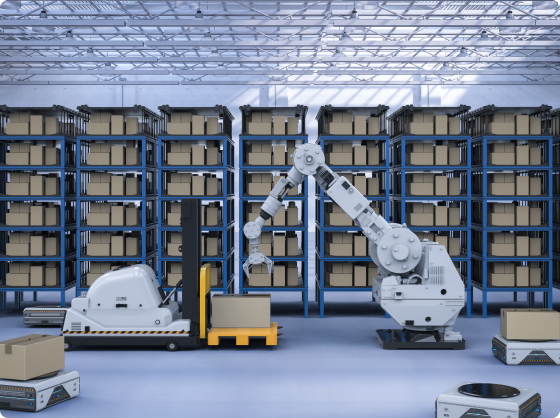
The intelligent logistics automatic sorter is machinery that drives logistics sorting motors to sort goods according to pre-set computer instructions and convey sorted items to designated positions. With the advancement of laser scanning, barcode and computer control technologies, automatic sorters are increasingly widely adopted in the logistics industry.Driven by the rapid growth of e-commerce, express delivery, apparel, book, pharmaceutical and tobacco industries, super-large sorting centers capable of processing millions of parcels every day have emerged. Thanks to the advantages of high efficiency, high accuracy and low damage rate, cross-belt sorters are gradually replacing traditional manual sorting.The intelligent sorting system determines which sorting chute the goods should enter through multiple identification methods including barcode scanning, color code scanning, keyboard input, weight detection, voice recognition, height detection and shape recognition. With the deployment of automated equipment, sorting operations are basically unmanned, featuring low error rates and high sorting efficiency.Logistics sorting motors have also been applied in innovative handling systems of automated high-rise warehouses and new automated parking garages. Automated parking garages equipped with logistics sorting drum motors install a series of primary longitudinal and transverse drum motors on the garage floor, while the vehicle-carrying plates serve as the secondary components. Controlled by computers, the interaction between the primary and secondary parts of logistics sorting motors moves vehicles into and out of parking spaces, achieving outstanding efficiency and space utilization.Various drum motors designed and manufactured by Changzhou Hetai have been widely adopted in logistics sorting systems and play a vital role as logistics sorting motors. Their main features are listed below:Integrated design of logistics sorting motor, driver and encoder, saving installation space.Simplified wiring between logistics sorting motor and driver for enhanced reliability.Flexible design modification. Compatible with different motors, and can be equipped with gearboxes, brakes and other components.Customizable logistics sorting functional motors available in accordance with customer requirements.Inquiry Hotline: 0519-88385510
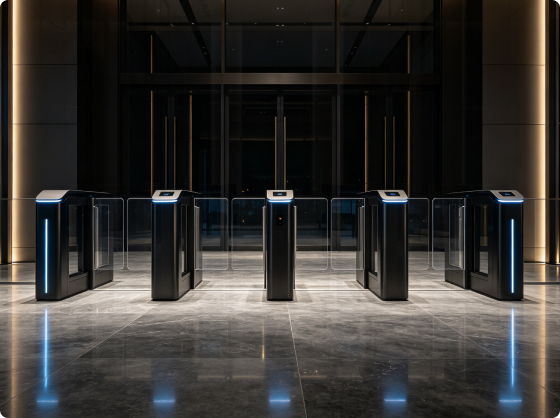
Barrier gate motors are mainly applied to ETC toll highway exits, parking lots and residential community entrances and exits. The 57-series brushless DC gearbox motor adopts a high-speed servo motor, featuring compact size, light weight, fast response, stable operation, rapid barrier lifting and slow barrier lowering with humanized safety design. The barrier gate supports left/right mounting direction adjustment.The 57-series brushless DC gearbox motor is highly suitable for use as a barrier gate motor. Its main features are as follows:When the barrier gate transmits the same power and current, the wire gauge required for DC power supply of the barrier gate motor is only half that for AC power supply. Meanwhile, the tower structure for DC power transmission is simpler than that of three-phase AC power transmission of equal capacity, and the line corridor occupies less land area.In cable transmission lines, DC power transmission generates no capacitive current, whereas capacitive current exists in AC transmission lines and causes power loss.For DC power transmission, the AC systems on both sides do not require synchronous operation. In contrast, AC power transmission mandates synchronous operation. During long-distance AC power transmission, the current phase will experience obvious fluctuations at both ends of the AC transmission system, which may result in loss of system synchronization. This requires complicated and large-scale compensation systems and highly integrated technologies for regulation. Otherwise, heavy circulating current may form inside equipment and cause damage, or trigger power outages due to asynchronous operation.Fault losses of DC power supply for barrier gate motors are lower than those of AC power supply. If two AC systems are interconnected via an AC line, a short-circuit fault on one side will lead the other side to feed short-circuit current to the faulty side. A permanent fault on any side of an AC circuit requires full-line power cut. By contrast, each pole in a DC transmission line can be regulated and operated independently without mutual interference. Therefore, if one pole fails, only the faulty pole needs to be shut down, and the other pole can still transmit no less than half of the rated power.Click to view detailed specifications of the 57-series brushless DC gearbox motor.Tel for inquiry: 0519-88385510
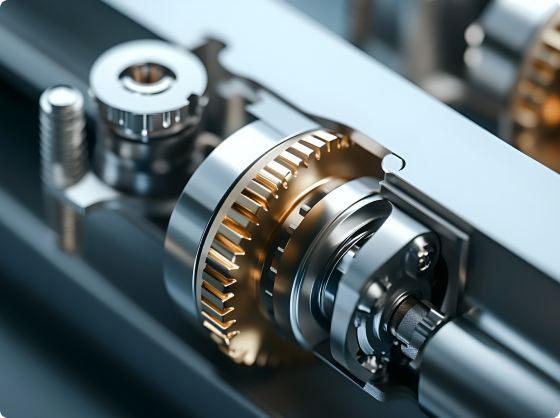
Stepper Motor Needle Roller Bearing Fault Analysis and MaintenanceAs the connecting component between the stationary and rotating parts of a stepper motor, bearings directly affect the motor’s operation, service life and overall product quality. Therefore, daily operation and maintenance of bearings should be highly prioritized.1. Common Fault Analysis of Needle Roller BearingsNeedle roller bearings feature low friction resistance, high mechanical efficiency, convenient lubrication and maintenance, and standardized specifications, making them widely applied in stepper motors. Their common faults are analyzed as follows:1.1 Excessively High Bearing TemperatureDuring stepper motor operation, the temperature of the bearing end cover and seat is considered normal if it does not feel hot to the touch. Overheating indicates abnormal bearing temperature, which is mainly caused by the following factors:(1) Substandard or deteriorated grease, excessive viscosity, or overfilled grease. The grease filling volume must be strictly controlled, generally accounting for 1/3 to 1/2 of the bearing seat capacity. More grease can be applied for bearings operating at low speed and light load, while less grease is required for high-speed and heavy-load bearings.(2) Improper bearing assembly. Newly replaced or reprocessed shafts may lack relief grooves or have unqualified journal dimensions, resulting in incomplete bearing seating. Excessively small bearing clearance leads to severe shear friction loss of internal oil flow and insufficient heat dissipation, causing bearing overheating. In contrast, excessive clearance will alter the dynamic characteristics of the bearing and trigger unstable rotor operation. It is essential to select appropriate bearing clearance and optimize assembly processes according to different equipment and operating conditions. Re-machining on a lathe and reassembly are required for unqualified parts.(3) Bearing creep. There are two types of creep: outer ring creep (relative displacement between the bearing outer ring and housing) and inner ring creep (relative displacement between the bearing inner ring and shaft journal). Creep causes bearing overheating accompanied by a squeaking sound, which can be mitigated with adhesives or resolved by disassembly, reprocessing and replacement.(4) Insufficient lubrication. A normally operating motor produces a steady and uniform humming sound. A gurgling sound or intermittent howling noise indicates insufficient bearing grease. Grease can be refilled through the bearing oil filler hole during operation, while rear bearing lubrication must be performed after motor shutdown.(5) Seven common types of needle roller bearing damage:① Raceway surface spalling. The rolling elements and inner/outer raceways bear periodic pulsating contact stress during operation. Fatigue spalling occurs when the stress cycles reach a certain threshold. Excessive load, improper installation, shaft bending, and misalignment between the motor shaft and mechanical shaft will accelerate spalling. Raceway spalling reduces rotational accuracy and causes mechanical vibration and noise.② Bearing burning③ Plastic deformation④ Bearing ring cracking⑤ Cage fracture⑥ Metal adhesion of the cage to rolling elements⑦ Severe wear of raceway surfaces1.2 Abnormal Bearing NoiseSlight operating noise of needle roller bearings is normal during operation. Loud, abnormal or impact noises indicate bearing faults. Different fault positions correspond to distinct noise characteristics:A regular clicking sound superimposed on the normal humming noise means scratches, grooves or corrosion on rolling elements and raceways; irregular scraping noises indicate internal contamination by iron filings or fine particles; discontinuous stuttering noises may result from outer ring or cage fracture; periodic squeaking signifies outer ring creep; gurgling and intermittent howling noises are typical of insufficient lubrication.Once abnormal noises occur, stop the motor for inspection. Verify smooth operation and no abnormal sound of front and rear bearings with professional testing. Visually check the cage, grooves, inner and outer rings for cracks, scratches and corrosion with a flashlight. Bearings with abnormal noise or jamming during rotation must be replaced promptly.Bearings are core and vulnerable components of stepper motors, whose normal operation determines the stable performance of the whole motor. Bearing operation is affected by multiple internal and external factors, making fault diagnosis complex. Combined with practical maintenance experience, this paper analyzes common bearing faults and corresponding solutions, adopts a simple and practical touch-and-listen method to judge bearing operating status, and puts forward targeted preventive measures against bearing damage.

Hetai Exhibits at Automechanika Frankfurt 01 Event HighlightsOn December 3, Hetai made a splendid appearance at the 15th Automechanika Shanghai. As a world-renowned exhibition brand and one of twelve global Automechanika shows, it is also Asia’s largest exhibition for the automotive aftermarket.Hetai Booth02 Product Applications As a vital component underpinning automation and most industrial production, motors also play an important role in the automotive industry.
Hetai Makes Appearance at Shanghai International Artificial Intelligence Exhibition01 HighlightsOn August 9th, Hetai made a splendid appearance at the 4th WAIE Shanghai International Artificial Intelligence Exhibition. Centered on the theme of “Smart Technology Empowers the Innovative Future”, the exhibition lasted for three days.Hetai’s sales representatives introduce products to customers.02 Product Applications02 Product ApplicationsAs the most critical components supporting overall automation and most industrial production, motors also play an important role in the artificial intelligence sector.Secondly, the trolley adopts a four-wheel structure with two rear wheels driven independently for differential steering and two front universal casters. Stepper motors deliver driving force to the drive wheels via reducers. Differential steering is realized when the two wheels run at different speeds.57 Series Gearbox MotorsArticulated RobotsPermanent magnet synchronous servo motors feature fast startup, low inertia, smooth operation, wide speed regulation range, high power density and high efficiency. For these merits, their adoption rate in high-end equipment keeps rising year by year. Most servo applications adopt a transmission solution combining reducers and motors. Traditional systems are attractive in terms of initial cost, and their performance has been widely verified in a variety of applications.Hetai will uphold the innovation spirit of striving for excellence, pursue development in artificial intelligence and other high-tech fields, and provide customers with higher-quality and comprehensive support.
01 HighlightsDuring the ITMA Exhibition in Barcelona, Hetai met with key customers to discuss the European market situation and strategic directions for future development. The company also promoted its strengths to exhibitors from various countries. Hetai’s newly launched planetary gearbox series drew great attention from numerous customers. Its sleek, minimalist appearance and ultra-quiet, smooth operation received unanimous recognition and praise.02ITMA关于ITMAFounded in 1951, ITMA is one of the most authoritative brands in the textile machinery sector. It serves as a premier platform showcasing cutting-edge technologies for textile and garment machinery to 120,000 visitors from 147 countries. The exhibition aims to explore new ideas, seek innovative sustainable development solutions and create opportunities for win-win cooperation. It drives industrial reform and innovation, brings together state-of-the-art technologies, and acts as a vital gathering for global sellers and buyers. To maintain influence and competitiveness within the textile machinery industry, Hetai has participated in ITMA exhibitions since 2015.03 Outlook for the Future After the one-week exhibition, Hetai has demonstrated its strength to the textile industry and gained deeper insights into the textile market and latest technologies. Although ITMA 2019 has concluded, Hetai’s journey has only just begun. We will uphold the craftsmanship spirit of pursuing perfection and continuous research, pursue development and innovation within our specialized field, and deliver superior products and services to customers.
A stepper motor is a device for discrete motion, inherently linked to modern digital control technology. At present, stepper motors are widely applied in domestic digital control systems. With the emergence of fully digital AC servo systems, AC servo motors are also increasingly adopted within digital control systems. To keep up with the development trend of digital control, most motion control systems employ either stepper motors or fully digital AC servo motors as actuators. Although both share similar control schemes (pulse trains and direction signals), they differ significantly in operational performance and applicable scenarios. A comparison of their performance characteristics is presented below.Difference 1: Control AccuracyTwo-phase hybrid stepper motors generally have a step angle of 3.6° or 1.8°, while five-phase hybrid stepper motors normally feature a step angle of 0.72° or 0.36°. Certain high-performance stepper motors achieve even smaller step angles. For instance, a stepper motor manufactured by Sitong Company for wire electrical discharge machines boasts a step angle of 0.09°. The three-phase hybrid stepper motor produced by BERGER LAHR (Germany) allows step angle selection via DIP switches: 1.8°, 0.9°, 0.72°, 0.36°, 0.18°, 0.09°, 0.072°, and 0.036°, covering all step angles of two-phase and five-phase hybrid stepper motors.The control accuracy of an AC servo motor is guaranteed by the rotary encoder mounted at the rear of the motor shaft. Taking Panasonic fully digital AC servo motors as an example: motors equipped with a standard 2500-line encoder adopt quadruple frequency technology inside the driver, yielding a pulse equivalent of 360°/10000 = 0.036°. For motors fitted with a 17-bit encoder, the motor completes one full rotation after the driver receives 2¹⁷ = 131,072 pulses. Its pulse equivalent equals 360°/131072 = 9.89 arcseconds, which is 1/655 of the pulse equivalent of a 1.8° stepper motor.Difference 2: Low-Frequency CharacteristicsStepper motors are prone to low-frequency vibration at low speeds. The vibration frequency depends on load conditions and driver performance, and is generally regarded as half the unloaded pull-in frequency of the motor. This low-frequency vibration, determined by the operating principle of stepper motors, severely hinders stable machine operation. When stepper motors run at low speeds, damping techniques are usually adopted to suppress low-frequency vibration, such as installing dampers on motors or enabling microstepping technology in drivers.AC servo motors operate extremely smoothly with no vibration even at low rotational speeds. AC servo systems feature resonance suppression functions to compensate for insufficient mechanical rigidity. Furthermore, the built-in frequency analysis function (FFT) can detect mechanical resonance points to facilitate system tuning.Difference 3: Torque-Speed CharacteristicsThe output torque of a stepper motor declines as rotational speed rises and drops sharply at relatively high speeds. Therefore, its maximum operating speed generally ranges from 300 to 600 RPM. AC servo motors deliver constant torque output; within their rated speed (typically 2000 RPM or 3000 RPM), they can continuously output rated torque, and operate under constant power output above rated speed.Difference 4: Overload CapacityStepper motors generally have no overload capability. AC servo motors possess strong overload capacity. For example, Panasonic AC servo systems support speed overload and torque overload. Their maximum torque reaches three times the rated torque, which can overcome inertial torque from inertial loads at startup. Since stepper motors lack such overload capability, designers often select motors with excessive torque to handle startup inertial torque during model selection. However, the machine does not require such high torque during regular operation, resulting in torque waste.Difference 5: Operating PerformanceStepper motors adopt open-loop control. Excessively high startup frequency or heavy loads easily cause step loss or stalling; excessive speed during stopping may trigger overshoot. Accordingly, proper acceleration and deceleration ramps must be implemented to guarantee control accuracy.AC servo drive systems utilize closed-loop control. The driver directly samples feedback signals from the motor encoder, forming an internal position loop and speed loop. Step loss and overshoot commonly seen with stepper motors rarely occur, delivering more reliable control performance.Difference 6: Speed Response PerformanceIt takes 200–400 ms for a stepper motor to accelerate from standstill to operating speed (typically several hundred revolutions per minute). AC servo systems offer superior acceleration performance. As demonstrated by the Panasonic MSMA 400W AC servo motor, acceleration from standstill to its rated speed of 3000 RPM only requires several milliseconds, making it suitable for control applications demanding rapid start and stop.In summary, AC servo systems outperform stepper motors in many performance aspects. Nevertheless, stepper motors are frequently used as actuators for low-demand applications. Hence, comprehensive factors including control requirements and costs should be evaluated during control system design to select the appropriate drive motor.A stepper motor is an actuator that converts electrical pulses into angular displacement. Simply put: every time the stepper driver receives a pulse signal, it drives the stepper motor to rotate by a fixed angle (the step angle) in the designated direction.You can control angular displacement by regulating the number of pulses to achieve precise positioning. Meanwhile, motor rotational speed and acceleration can be adjusted by controlling pulse frequency to realize speed regulation.Stepper motors fall into three categories: Permanent Magnet (PM), Variable Reluctance (VR), and Hybrid (HB).Permanent Magnet (PM) stepper motors are mostly two-phase types with relatively low torque and compact dimensions. Typical step angles are 7.5° or 15°.Variable Reluctance (VR) stepper motors are generally three-phase designs capable of high torque output, with a standard step angle of 1.5°, yet accompanied by significant noise and vibration. This type was phased out in developed countries such as Europe and the United States back in the 1980s.Hybrid (HB) stepper motors combine the merits of PM and VR types. They are further divided into two-phase and five-phase versions: two-phase models normally have a step angle of 1.8°, while five-phase models feature 0.72°. Hybrid stepper motors are the most widely adopted type.
0519-88385510 / 0519-88369923
Mobile+86-15106112177 (Mr. Zhao)
Fax0519-88770911
Emailinfo@ht-motor.com
AddressIndustrial Concentration Zone, Qinxin Village, Yaoguan Town, Wujin District, Changzhou City, Jiangsu Province
0755-23310859
Mobile15986759015
AddressRoom 1601, Building 2, Science and Technology Innovation Workshop, No. 6 Songjiang Road, Shapu Community, Songgang Street, Bao